Polselli Gluten Free Pizza Flour, Lactose Free, 2.2lb, Flour & Starch Blend, Product of Italy Review (2026)
Updated September 20, 2026 · Research-based review
Our verdict
Good for gluten-free and lactose-free households that want a flour blend made specifically for pizza dough rather than a generic all-purpose mix. The Italian milling pedigree is the draw, but the 2.2lb bag is small if you bake gluten-free pizza every week.
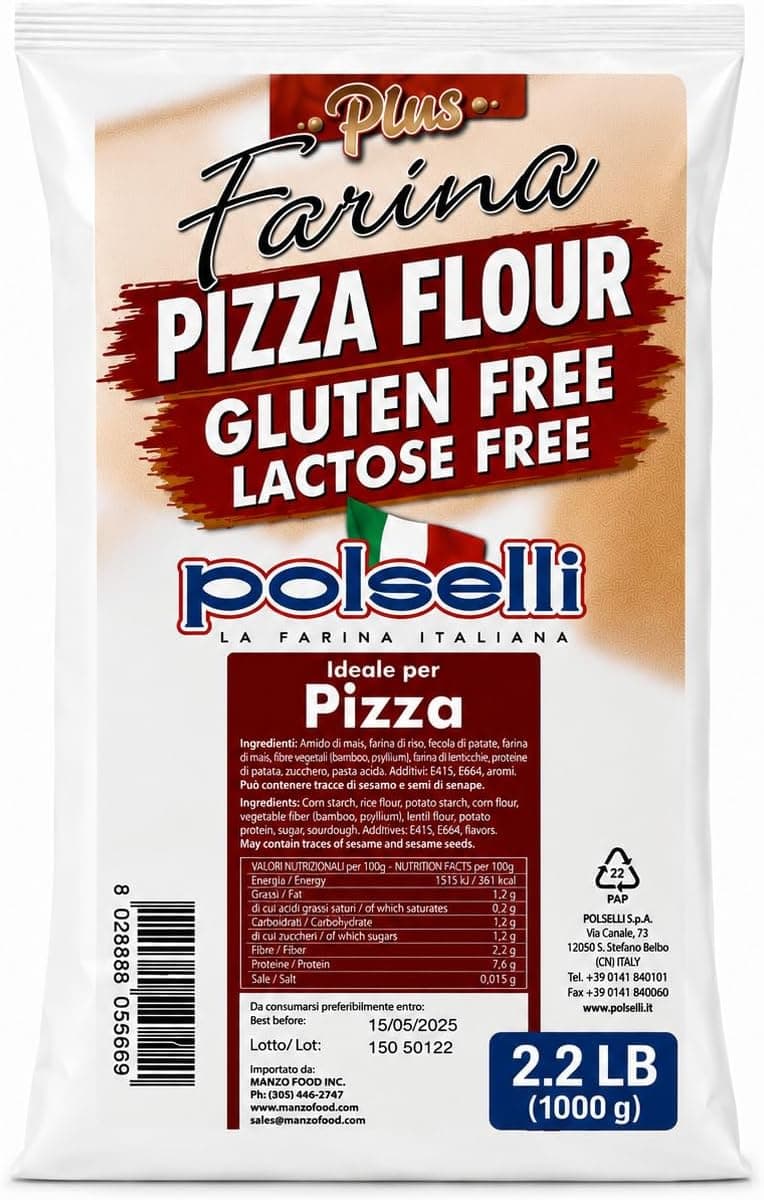
Polselli's 2.2lb gluten free pizza flour, lactose free flour and starch blend, a product of Italy.
Price range: See on Amazon
What we liked
- + Product of Italy from a respected pizza flour mill
- + Lactose free blend suits households with dairy sensitivities
- + Flour and starch blend is made for pizza dough
Trade-offs
- - 2.2lb size is small for anyone baking gluten free pizza every week
- - Import pricing makes it pricier than domestic mixes
What it is
Polselli's gluten-free pizza flour is a flour and starch blend milled in Italy and sold in a 2.2lb bag. It is formulated as a multi-purpose mix for baking pizza, bread, and pasta rather than a straight rice or almond flour substitute, so it behaves more like a dedicated pizza dough mix than a catch-all gluten-free flour. Polselli is an established Italian milling company, and the brand markets this blend as all-natural. Because it combines flour with starches rather than relying on gums alone, it is built to hydrate and stretch closer to how a wheat-based pizza dough behaves, which matters for anyone trying to get a real crust texture without gluten.
Who it suits
This product fits home cooks managing both a gluten intolerance and a lactose or dairy sensitivity, since the blend is labeled both gluten-free and lactose-free. It is a better fit for someone making pizza dough specifically, rather than someone who wants one flour for cakes, cookies, and everything else. Bakers who already work with Italian 00 flour for regular dough and want a gluten-free equivalent that behaves similarly will likely get more consistent results than switching between generic supermarket gluten-free blends. It is less suited to large households or anyone baking pizza multiple times a week, since the bag size means frequent reordering.
Strengths
The clearest strength is that this is a purpose-built pizza flour rather than a repurposed baking mix, so the starch ratio is set up for dough elasticity and a tender crust rather than for muffins or bread loaves. Sourcing from an Italian mill with pizza flour experience is a meaningful signal for anyone who has struggled with gritty or crumbly gluten-free crusts, since starch blend quality affects how the dough stretches and browns. The lactose-free labeling is also useful, since some gluten-free flour blends use dairy-derived additives for texture that this one avoids, widening who in a household can actually eat the resulting pizza.
Trade-offs
At 2.2lb, this bag will only cover a handful of pizza doughs before it runs out, so it works better as a way to try the blend or for occasional pizza nights than as a pantry staple for weekly baking. Because it is imported from Italy, it also tends to cost more per pound than domestic gluten-free flour blends sold in similar bag sizes, which matters if pizza is a regular fixture on the menu. Buyers should also expect gluten-free dough to handle differently than wheat dough regardless of brand, needing more careful hydration and shaping even with a well-made blend like this one.
Bottom line
For gluten-free and lactose-free bakers who want a flour blend made specifically with pizza dough in mind, this is a reasonable starting point backed by an established Italian mill. It is not the most economical option for frequent pizza nights given the small bag size and import pricing, so heavier users may want to look at larger bulk formats once they know the blend works for their kitchen. As an entry point or for occasional use, it delivers what it promises: a dedicated pizza flour and starch blend rather than a generic gluten-free substitute, and the lactose-free labeling adds real value for households juggling more than one dietary restriction at the dinner table. Buyers who bake gluten-free pizza only occasionally will likely find one bag lasts long enough to be worthwhile before it needs replacing.
Frequently asked questions
Is this flour also dairy-free, not just lactose-free?
The listing specifies lactose-free rather than dairy-free; check the ingredient label on your bag if you need to avoid all dairy derivatives, not just lactose.
Can this flour be used for bread and pasta too?
Yes, it is marketed as a multi-purpose flour and starch blend for pizza, bread, and pasta, not just pizza dough.
How much pizza dough does one 2.2lb bag make?
Amazon does not publish an exact dough yield, but a 2.2lb bag is generally enough for a handful of pizza doughs rather than a full pantry supply for weekly baking.
Is this flour imported or made in the US?
It is a product of Italy, which is part of why it costs more per pound than most domestic gluten-free pizza flour blends.
Prices change often, so check the current price and availability on Amazon.
Check price on AmazonPizza Oven Craft may earn a commission from the link above.