Stretching Pizza Dough Without Tearing
Published How we research

Torn dough is almost never a hand problem; it is a dough problem that shows up in your hands. Dough tears for three main reasons: it is too cold, it is under-proofed and tight, or its gluten is either underdeveloped or broken down from over-fermentation. Before blaming your technique, check the fundamentals: dough balls should sit at room temperature for one to two hours after refrigeration, should look visibly puffed and relaxed, and should stretch a small test piece thin enough to pass light without immediately ripping. Fix the dough and the stretching largely fixes itself.
Products from this article
The highest-scoring picks from the buying guides this article links to. Scores are our editorial assessment, not customer ratings.
+ Blade cover protects fingers and keeps the wheel sharp in a drawer
From our guide: Best Gifts for Pizza Lovers
+ 7 Inch perforated head fits easily through Ooni and other small oven mouths
From our guide: Best Turning Peels for Even Home Pizza Bakes
+ IR thermometer included to read true stone temperature before launching
From our guide: Best Portable Pizza Ovens for Camping and Travel
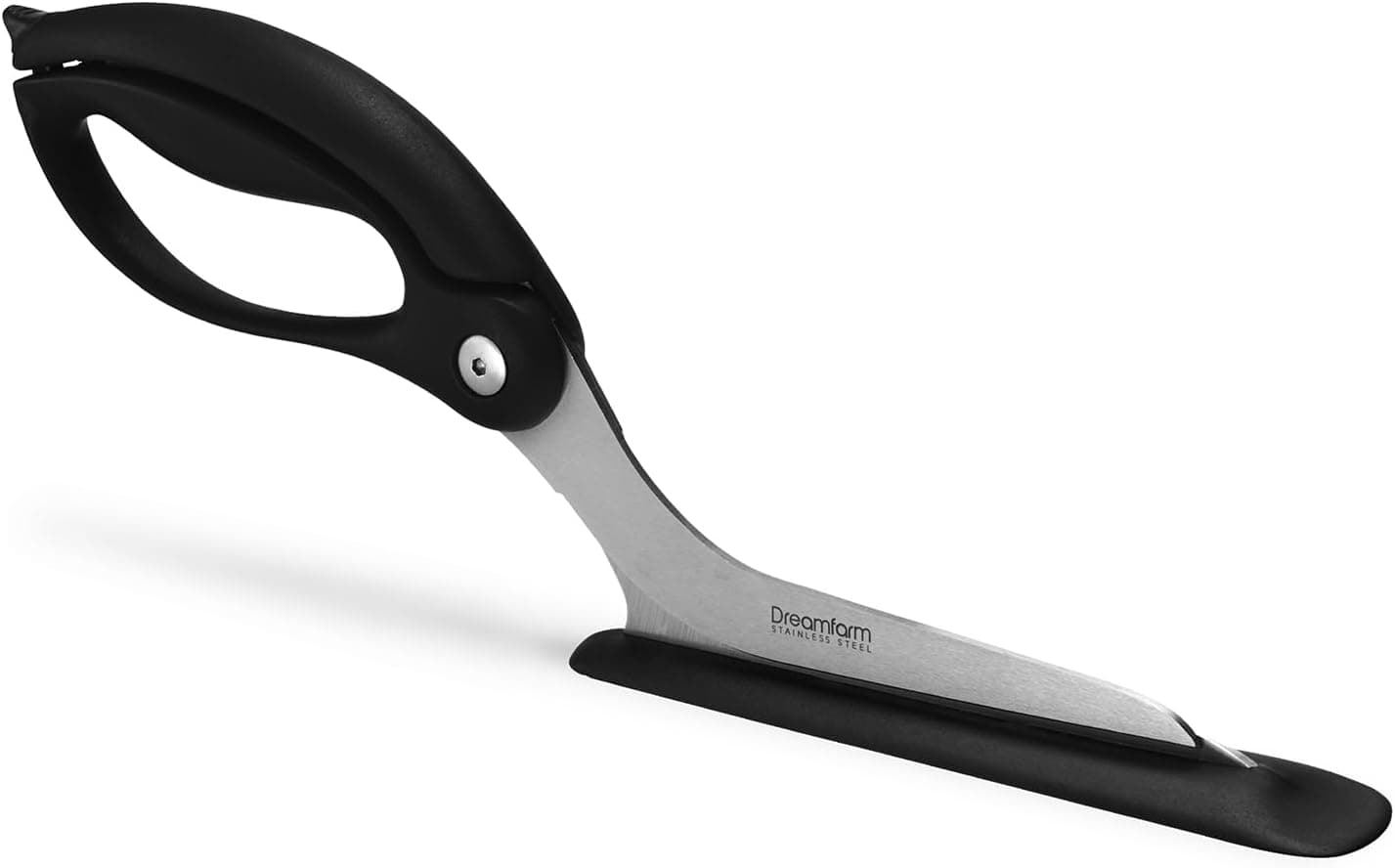
+ Scissors cut right on the stone or pan without scratching surfaces
From our guide: Best Gifts for Pizza Lovers



Temperature deserves special emphasis because it is the most common culprit. Cold gluten is stiff and inelastic, like trying to stretch chilled chewing gum. A ball at 5 degrees Celsius straight from the fridge will fight you, snap back, and then tear where your fingers concentrate stress. At 18 to 21 degrees, the same ball flows. If your kitchen is cold, give the balls more time or find a warmer spot; if you are in a hurry, know that no technique compensates for cold dough, and plan better next time rather than wrestling.
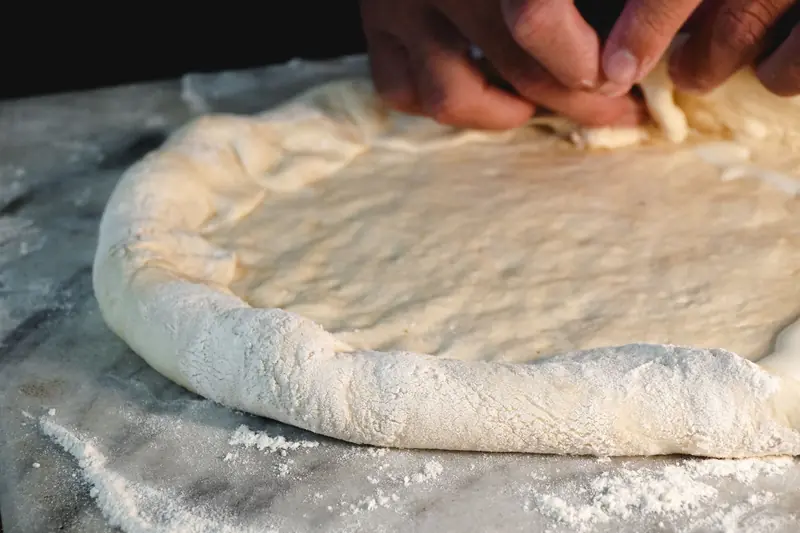
When the dough is ready, start on a lightly floured surface and work from the center out. Press flat with fingertips, beginning in the middle and pushing outward toward the edge, leaving a two centimeter border untouched; this preserves the gas that becomes your rim. Flip and repeat. You should now have a thick disc. Most of the remaining stretch should come from gravity, not fingers: lift the disc, drape it over the backs of both hands with knuckles slightly apart, and rotate it, letting its own weight thin the center while your knuckles support it. The dough stretches most where it hangs unsupported, so keep it moving.
The classic mistakes concentrate stress in one spot. Pinching the dough between thumb and fingers creates a thin ring that becomes a hole. Stretching the same section repeatedly instead of rotating creates a translucent window that tears on the peel or, worse, in the oven. Pulling the edges outward with fingertips thins the rim you spent effort preserving. If you notice a section going thin, stop working it entirely; move gas and thickness around by rotating, and let the thicker regions catch up. An uneven pie you can rescue; a hole you mostly cannot.
If a hole does appear, do not panic and do not stretch further. Small tears can be patched by pinching the edges back together and pressing a bit of dough from the neighboring rim over the seam. Sauce and cheese will hide the scar, though the patch will bake slightly denser. If the tear is large or the dough is shredding in multiple places, ball it back up loosely, let it rest twenty to thirty minutes to relax, and try again; a rest heals an overworked dough surprisingly well.
Finally, know when the dough is telling you something about your recipe. If every batch snaps back aggressively, your dough is under-proofed or too strong: use less flour strength, more time, or slightly more water. If every batch tears like wet paper with no elasticity at all, it is over-fermented or too weak: shorten the ferment, cool it down, or step up to a higher-protein flour. Stretching is a conversation, and after a dozen sessions you will find your hands adjusting to what each ball says before you have consciously noticed it.
Popular right now
- Best Semolina Flour for Pizza Peels and Crispier CrustsBuying guide
- Troubleshooting Soggy Pizza CentersArticle
- Best Low-Moisture Mozzarella for Homemade PizzaBuying guide
- Best Pizza Stone Sets with Peels and AccessoriesBuying guide
- Semolina vs Flour for DustingArticle
- Best Perforated Pizza Peels for Home OvensBuying guide
Based on the last 28 days of search and visitor data.